






How to improve the accuracy of cross-border e-commerce customer service translation? Best Practices for AI Translation
Sellers engaged in cross-border e-commerce have probably experienced this scenario: a customer sends a message in a foreign language, you use a translation tool to convert it into Chinese, and then use a translation tool to translate it back when replying - over and over again, the meaning has "changed". What's worse is that the customer feels that your reply is "completely wrong" and directly closes the conversation window. This is the direct consequence of the problem of translation accuracy: loss of orders, damage to reputation, and waste of customer service manpower.
With the rapid development of AI translationtechnology, the quality of machine translation has made a qualitative leap. But there is a whole set of best practices between "usable" and "easy to use". This article will start from the actual scenario of e-commerce customer service, dismantling the system and how to improve the accuracy of translation, so that your cross-border e-commerce translationwork can truly be "faithful, expressive and elegant".
1. How much impact does translation accuracy have on e-commerce customer service?
1.1 Directly affects customer experience and conversion
In cross-border e-commerce scenarios, customer service dialogue is the most important "first point of contact" between customers and brands. Research data shows:
- Customer service replies with poor translation quality will reduce customer satisfaction by approximately 40%
- Loss of orders due to translation misunderstandings account for an average of 25% of customer service communication problems
- Highly accurate translation responses can increase customers’ repurchase intention by more than 30%
To put it simply, inaccurate translation is not a "little problem", but a real waste of money.
1.2 Indirectly affecting brand image
In the age of social media, if a poorly translated customer service message is screenshotted and spread, the damage to your brand may be far greater than you imagine. Especially for sellers in markets such as Southeast Asia and the Middle East, consumers in these markets have increasingly higher requirements for "localized experience" - it is not enough to speak English, but to communicate in languages and expressions they are familiar with.
2. Three major factors affecting the accuracy of AI translation
2.1 Professionalism of industry terms
Cross-border e-commerce involves a large number of professional terms: SKU, MOQ, FOB, DAP, customs clearance, tariffs, logistics tracking numbers... The corresponding expressions of these words in different languages often cannot be solved by literal translation. For example, "free shipping" in English is "free shipping", but in some language environments, the more authentic expression may be "delivery included" or "no shipping fee". If AI translationcannot handle these terms accurately, communication will be skewed.
2.2 Context and tone
The tone of e-commerce customer service dialogue is very diverse - pre-sales consultation needs to be enthusiastic and professional, after-sales complaints need to be patient and comforted, and logistics reminders need to be concise and clear. When the same original Chinese text is translated into a foreign language in different scenarios, the wording and sentence structure should be different. Traditional machine translation often only does "literal translation" and cannot understand the context.
2.3 Differences in target languages
Translation difficulty varies greatly between languages. The accuracy of translation from English to Spanish is usually very high, but for cross-language translations such as Chinese to Arabic and Chinese to Thai, the probability of errors will increase significantly. This requires that when selecting a translation solution, adaptation must be made to the target language.
3. 4 best practices to improve translation accuracy
Practice 1: Establish an industry-specific terminology database
This is the most basic and effective way to improve translation accuracy. A termbase is an "industry vocabulary comparison list" that clearly stipulates what each professional term should be translated into in the target language.
To build an e-commerce terminology database, you can start from the following directions:
- Product terminology: standard translation of product name, material, specifications, and functional description
- Logistics terms: transportation methods, timeliness, costs, customs clearance related vocabulary
- Payment terms: payment methods, refund procedures, invoice-related terms
- After-sales terminology: return and exchange policy, warranty terms, FAQ template
- Marketing terms: expressions such as promotions, coupons, membership levels, etc.
After establishing a term database, combined with a translation tool that supports term database binding, the system will automatically identify and replace it with the preset standard translation every time it is translated, greatly reducing terminology translation errors.
Practice 2: Flexibly switch between multiple translation channels
No translation engine is "one size fits all". Different translation channels have their own advantages in different language pairs and different scenarios:
- Google Translate: Covers the widest range of languages (133+), suitable for basic translation of small languages
- DeepL: European and American language pairs have the highest accuracy and natural and smooth writing
- ChatGPT Translation: Strong ability to understand context, suitable for complex contexts and long sentence translation
- Microsoft Translator: Easy to connect with enterprise systems, and stable batch translation
- Youdao Translation: Excellent Chinese-English translation quality, suitable for Chinese overseas sellers
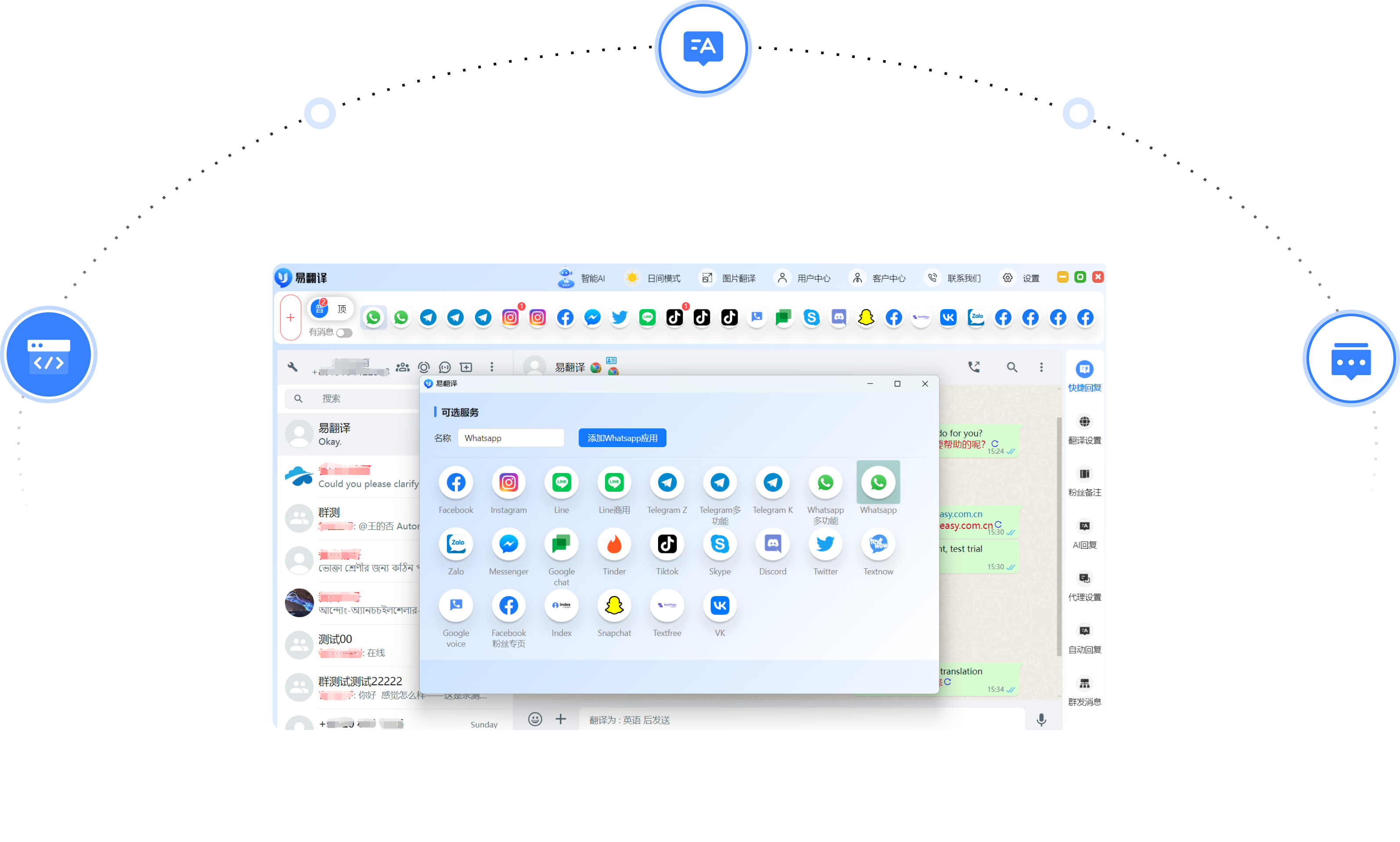
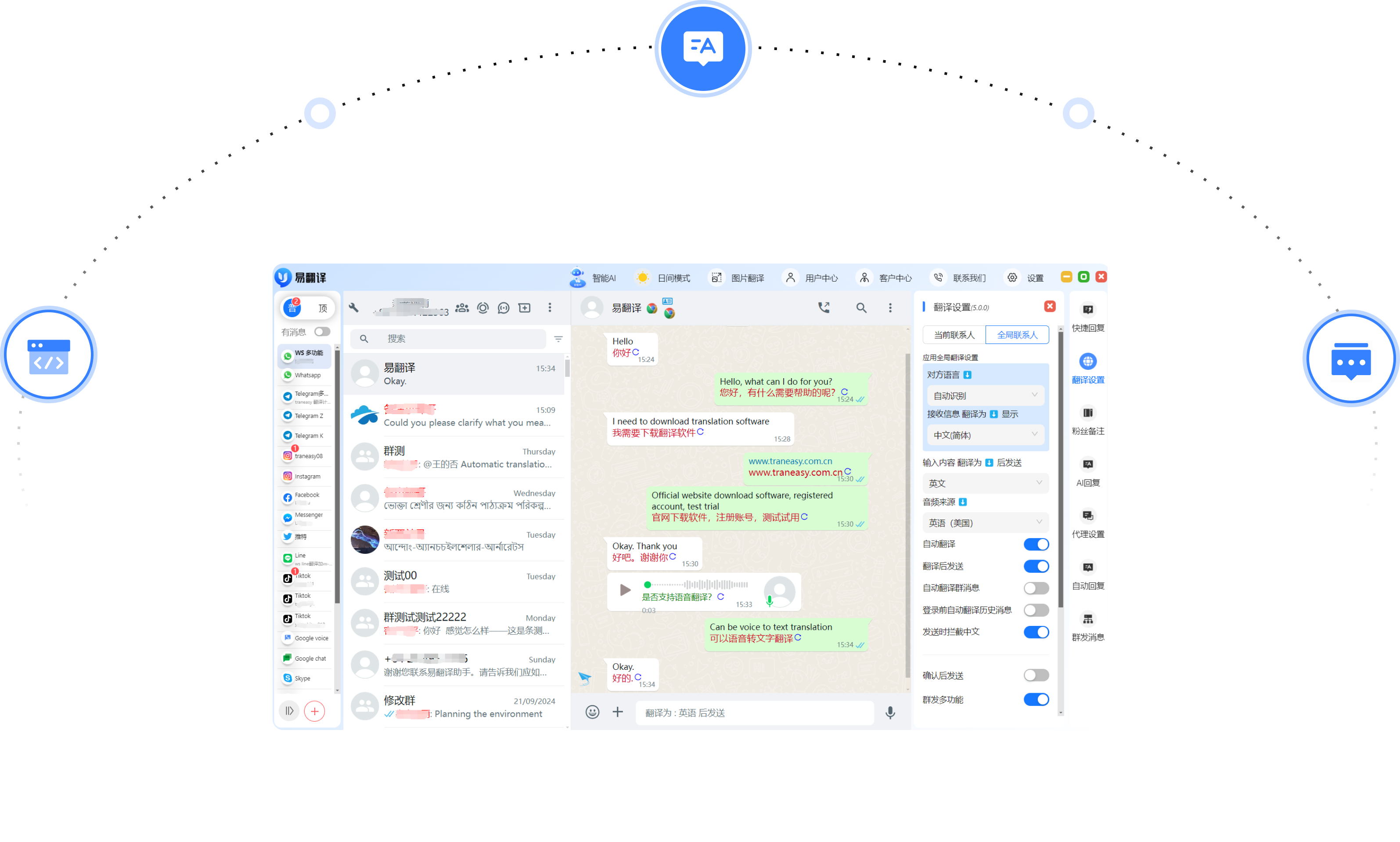
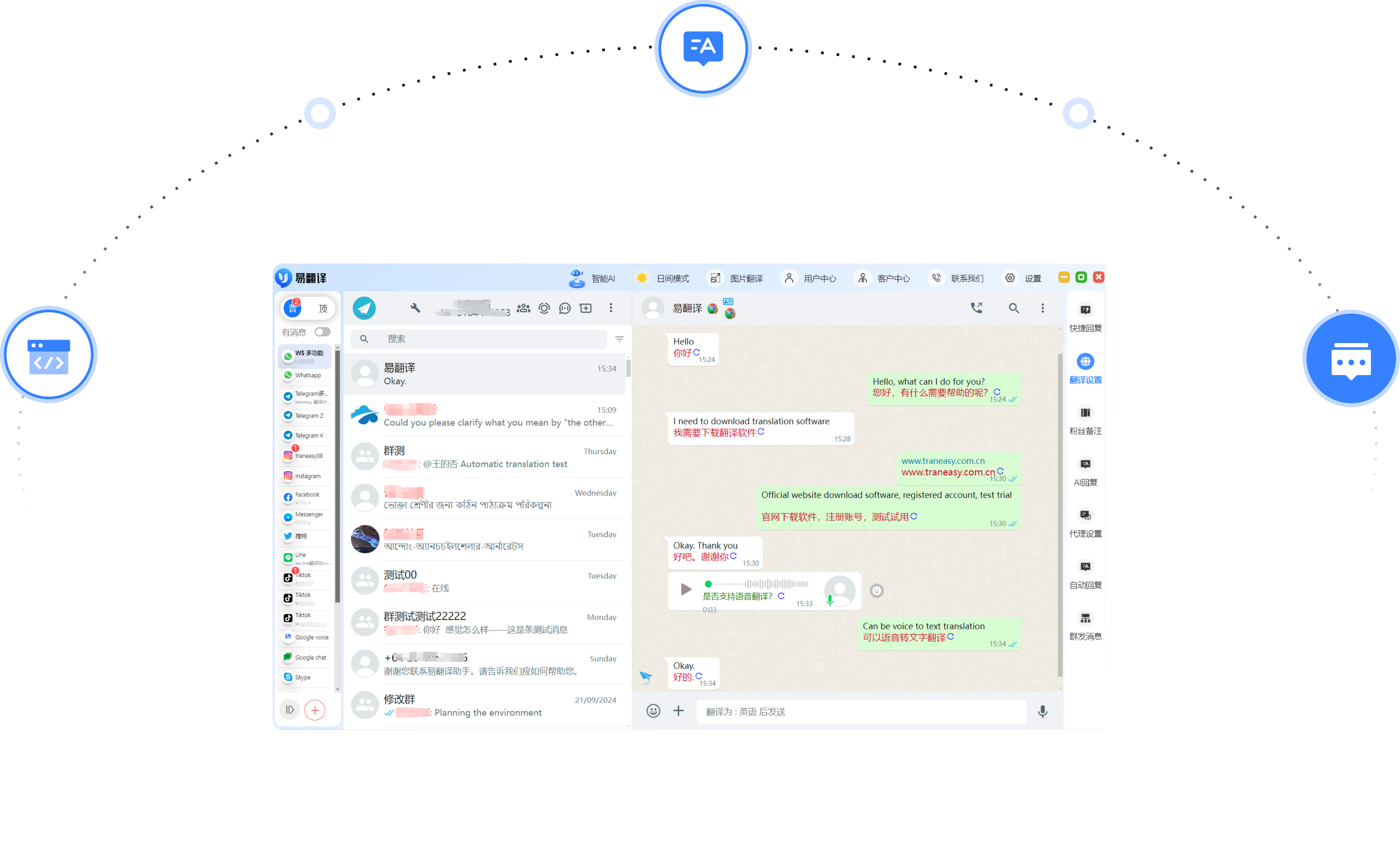
In the actual work of Cross-border e-commerce translation, it is recommended to flexibly select the most appropriate translation channel based on the customer's region and conversation scenarios. Some professional customer service translation platforms already support one-click switching of multiple channels, allowing you to obtain optimal translation quality in different languages and scenarios.
Practice 3: Make good use of AI to optimize translation tone
Since 2024, large language models represented by ChatGPT have demonstrated powerful "tone adaptation" capabilities in the field of translation. By adding scene prompt words to the translation instructions, the "human touch" of translation can be significantly improved.
For example:
- Pre-sales consultation scenario: "Please translate the following message in a warm and friendly tone"
- After-sales apology scene: "Please translate the following message in a sincere and professional tone"
- Promotion notification scenario: "Please translate the following message in a concise and attractive tone"
This "scenario-based translation" method will give customers a much better experience than traditional literal translation.
Practice 4: Establish manual inspection and feedback mechanism
No matter how powerful the AI customer servicetranslation tool is, it cannot be 100% accurate. The key is to establish a closed-loop mechanism of "machine translation + manual sampling + continuous optimization":
- Sampling 5-10% of the translated conversations every day to check accuracy and tone suitability
- Record high-frequency translation errors into the term database as a basis for subsequent automatic correction
- Regularly evaluate the performance of different translation channels and adjust channel priorities
- Locate translation issues and make improvements based on customer feedback and complaint records
4. The future trend of AI translation in e-commerce customer service
Looking to the future, the application of Translation AIin the field of cross-border e-commerce will show the following trends:
Real-time multilingual dialogue- AI translation will evolve from "item-by-item translation" to "real-time conversation flow translation", and the dialogue experience between customer service and customers will be close to native language communication.
Personalized translation memory- The system will automatically learn each customer's expression habits and preferences based on their historical conversation data, and provide more and more personalized translations.
Multi-modal translation- In addition to text translation, AI will also support text translation in pictures and real-time translation of voice messages, truly realizing "barrier-free communication in all scenarios."
Autonomous error correction- The AI translation engine will have stronger self-correction capabilities and can automatically identify and correct potential semantic deviations during the translation process.
5. Summary
Improving translation accuracydoes not happen overnight, but it is not as difficult as imagined. The core lies in three things: building a good terminology database to lay the foundation, selecting the right translation channel to improve quality, and doing manual sampling to ensure the bottom line. With the rapid development of AI technology, by making good use of these tools and methods, your cross-border e-commerce customer service team can achieve efficient operations of "one person serving the world".
To learn more about translation functions, please visit the official website of Traneasy: www.yfanyi.com