







Introduction: In cross-border e-commerce communication, translation ability is competitiveness
In 2025, the global cross-border e-commerce market will continue to grow rapidly, and more and more Chinese sellers are setting their sights on emerging markets such as Southeast Asia, the Middle East, and Latin America. But a problem always plagues cross-border teams:How to do business if you don’t understand the language?
According to statistics, more than 70% of cross-border consumers prefer to communicate with sellers in their native language. If your customer service team is only bilingual in Chinese and English, when faced with customer inquiries in Vietnamese, Thai, Arabic, or Spanish, the response will either be slow or the words will not be understood - which will directly lead to a loss of conversion rate.
In this context,Cross-border e-commerce translation toolhas changed from "icing on the cake" to "essential". Especially when you need to cover multiple social platforms at the same time, a unified and efficientCustomer service translationPlan can make your team even more powerful. This article will start from the actual pain points and help you sort out the selection ideas of multi-platform translation solutions.
Three major pain points in cross-border e-commerce customer service translation
1. There are many platforms and different languages, and customer service is tired of dealing with them.
Nowadays, when doing cross-border e-commerce, it is almost impossible for you to stick to just one channel. WhatsApp is a mainstream communication tool in Brazil and the Middle East; Line has a large number of users in Japan and Thailand; Zalo is a national application in the Vietnamese market; Telegram is popular in Russian-speaking areas and the Middle East. Each platform has active customers, and each customer may speak a different language.
An ordinary 3-person customer service team may need to handle inquiries in multiple languages such as English, Spanish, Vietnamese, Japanese, Arabic, and Thai at the same time. Rely on human translation? The efficiency is too low. Relying on Google Translate to switch back and forth? The operation is too cumbersome and error-prone.
2. The quality of translation is uneven, and professional terminology is overturned.
General translation tools have little problem when dealing with daily conversations, but they are prone to errors when encountering professional terminology in e-commerce scenarios. For example, for words such as "SKU", "customs clearance", "logistics tracking" and "return and exchange policy", machine translation often gives inaccurate corresponding expressions, which can cause confusion to customers at best, or cause disputes at worst.
Cross-border e-commerce communication, the accuracy and professionalism of translation directly affect customer experience and repurchase intention. A tool that translates "shipping fee" into "shipping fee" instead of "shipping fee" is obviously not as good as a translation solution optimized for e-commerce scenarios.
3. Unable to respond in real time, customers cannot afford to wait
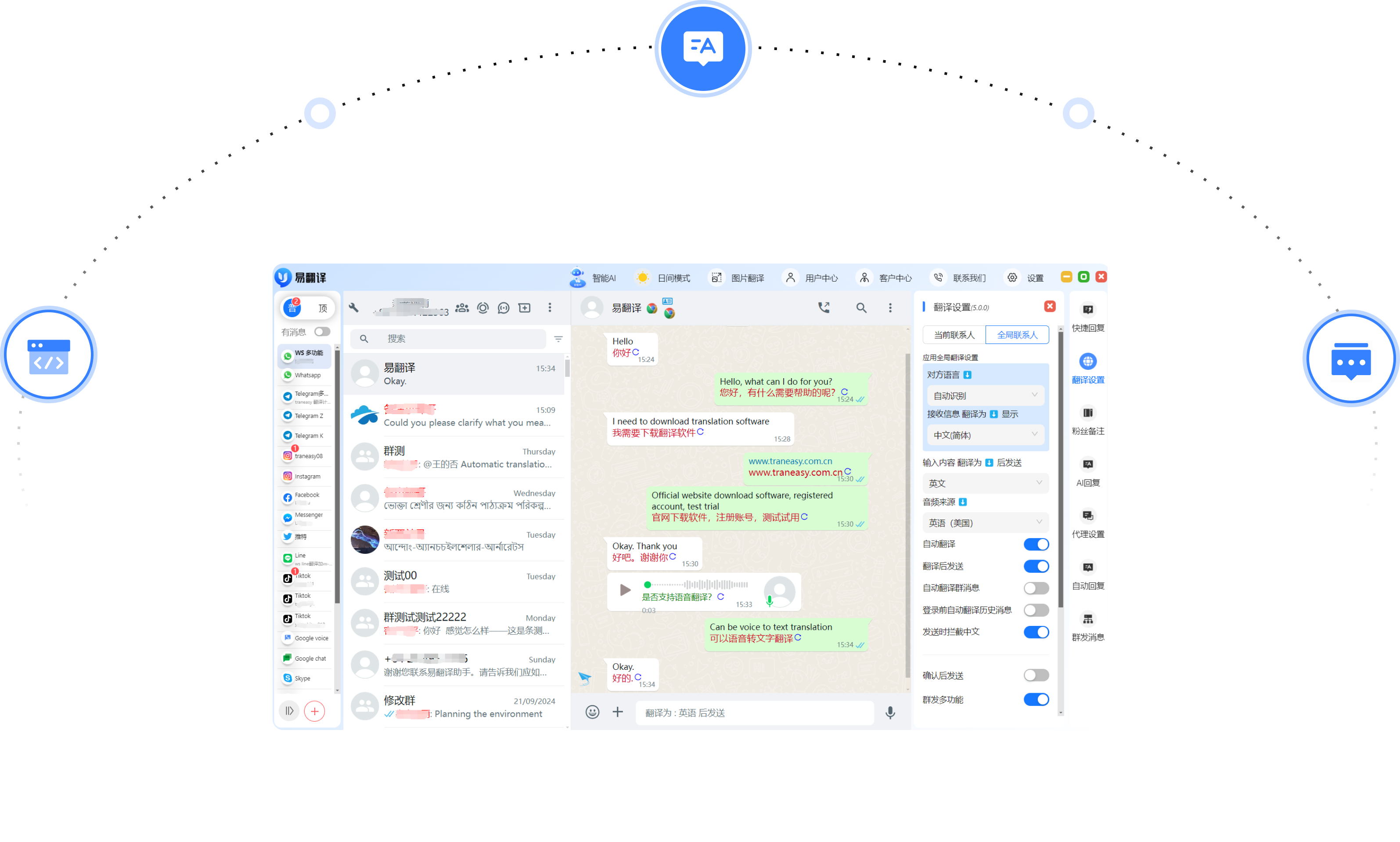
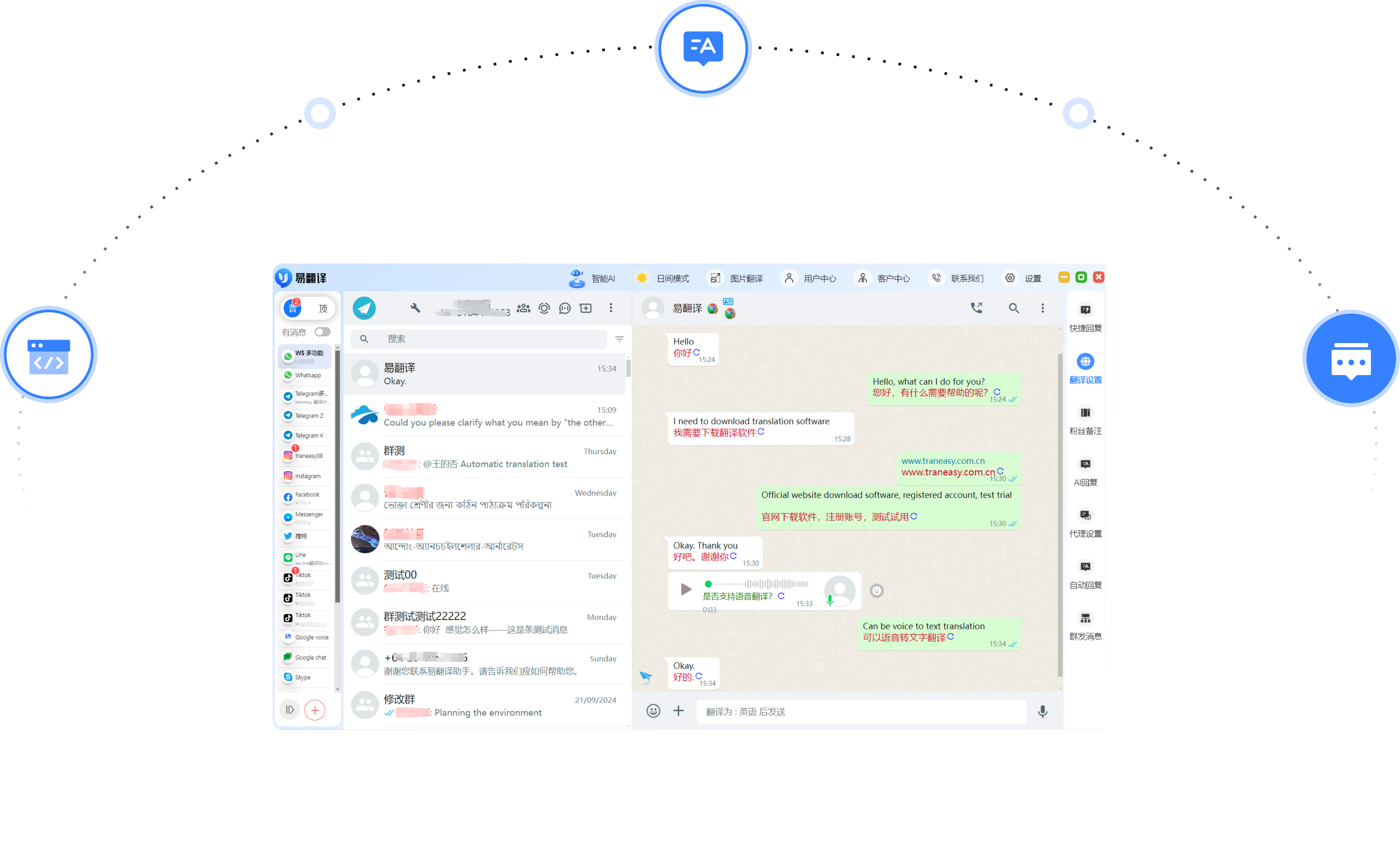
Cross-border customer consultations often involve time differences. When it's late at night on your end, it may be peak shopping time on the customer's end. If the translation tool requires copying, pasting, and switching windows, the customer service response speed will drop significantly. Real-time two-way translation - that is, inputting Chinese and automatically displaying foreign languages, and receiving foreign languages and automatically translating them into Chinese - is a truly efficient solution.
Comparison of mainstream cross-border e-commerce translation solutions
Currently, the main solutions on the market to solve customer service translation problems include the following:
- Browser plug-in translation: Install the Chrome extension to implement translation on the web side of WhatsApp Web. The advantage is that it is free and lightweight; the disadvantage is that it only supports the web version, cannot be used on the mobile version, and has a single function.
- Mobile phone system level translation: Use the translation function that comes with Android or iOS. The disadvantage is that it only supports in-system applications and does not support in-depth integration of third-party social apps.
- Independent translation APP: Such as Google Translate, DeepL, etc. Suitable for single translation, but not suitable for real-time conversations in high-frequency customer service scenarios.
- Professional customer service translation platform: A tool specially designed for e-commerce customer service scenarios. It supports real-time two-way translation of multiple social APPs and integrates functions such as customer management and group messaging.
For cross-border sellers who handle dozens to hundreds of inquiries every day, the efficiency bottlenecks of the first three options will soon appear. The fourth type - professional customer service translation platform - is the long-term choice.
Why is multi-platform unified translation needed?
Many sellers will find separate translation solutions for each platform in the initial stage. For example, WhatsApp uses a plug-in, Line uses a tool, and Zalo installs another one. This seems flexible, but in fact it will cause several obvious problems:
- Tool fragmentation: Customer service needs to switch between multiple tools, and the operation cost is high.
- Customer data is fragmented: Customer information and conversation records on different platforms are stored dispersedly and cannot be managed uniformly.
- Inconsistent translation style: Different tools use different translation engines, and the output language styles vary greatly, which affects brand consistency.
- Difficulties in teamwork: New employees need to learn multiple sets of tools, and training costs are high.
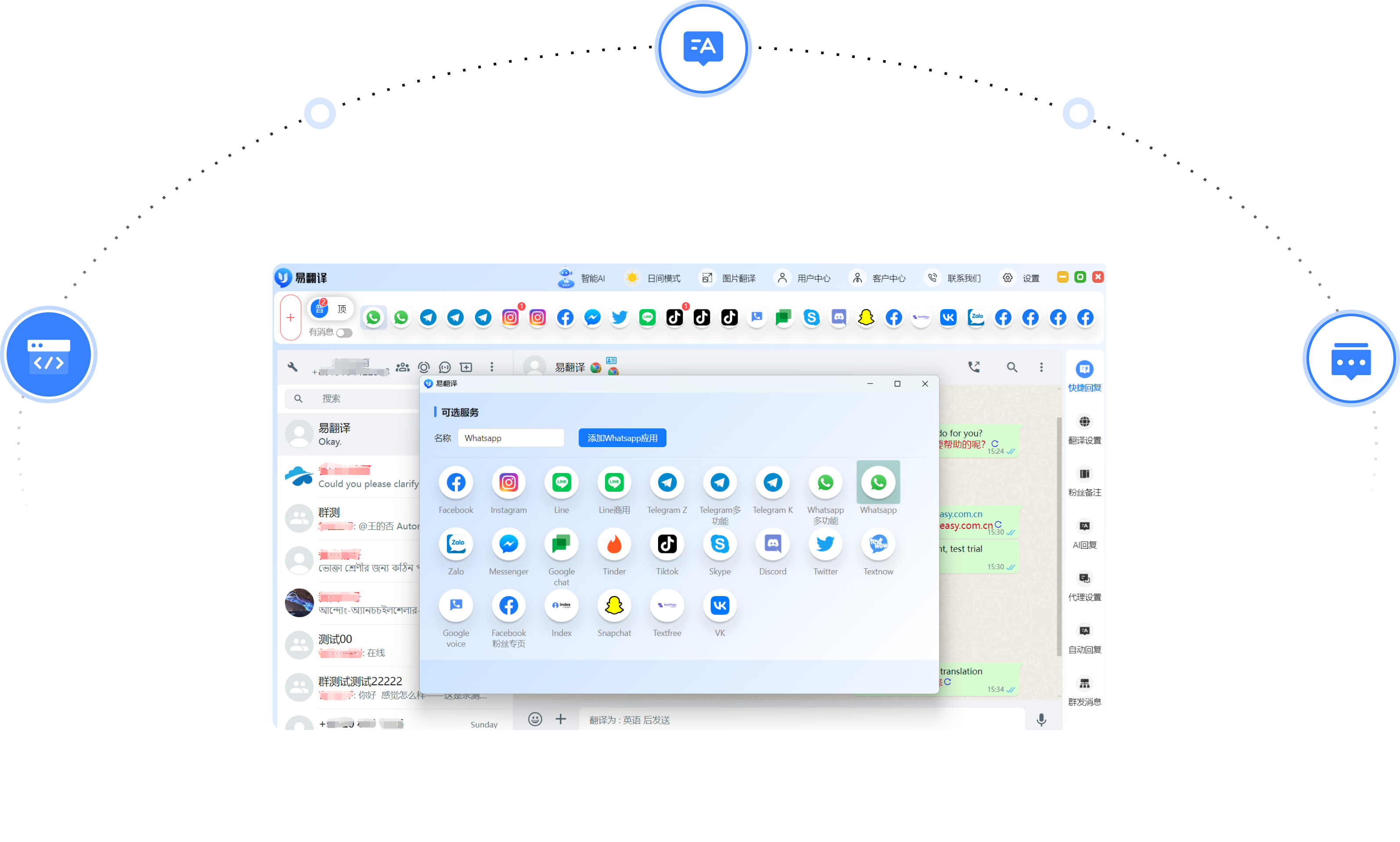
A translation solution that supports unified management of multiple platforms allows your customer service team to simultaneously process messages from more than 20 social APPs such as WhatsApp, Line, Zalo, and Telegram on one interface, and all translation, customer data, and group messaging functions are concentrated on one platform. This "catch them all" model not only saves tool costs, but also greatly improves team efficiency.
Selection suggestions: What functions should a useful cross-border e-commerce translation tool have?
If you are considering introducing a customer service translation solution, the following key capabilities are worth focusing on:
Multi-platform coverage capability
Make sure the tool supports the social platforms you may use now and in the future. At least it should cover mainstream applications such as WhatsApp, Line, Zalo, and Telegram. Some platforms also supportOpen multiple applicationsfunction, one account manages the business of multiple stores or multiple regions.
Translation engine richness
Different translation engines have their own advantages. Google Translate covers a wide range of languages, DeepL performs well in European languages, and AI engines like ChatGPT have advantages in understanding context and professional terms. A good platform should support the free switching of multiple translation channels, allowing you to choose the most appropriate engine according to specific scenarios.
Real-time two-way translation
This is the core function of customer service translation scenarios. Foreign language messages sent by customers are translated into Chinese in real time, and Chinese replies you enter are translated into the customer's language in real time. The whole process is smooth and seamless. Ideally, it should also support200+ languagescoverage.
Customer database management
Translation is only the first step, customer relationship management is equally important. Tools that can record basic customer information, purchase history, and communication records can help you provide more personalized services.
Bulk sending and marketing functions
In addition to daily customer service communication, cross-border e-commerce also needs to regularly conduct mass messaging activities such as new product promotions and promotional notifications. A platform that supports multi-language mass messaging allows you to write Chinese content at once and automatically translate it into multiple languages and send it to customers in different regions.
Conclusion
The competition among cross-border e-commerce has upgraded from "whether the goods are available" to "whether the service is good or not." Translation capability is no longer an optional additional feature, but a core competitiveness that directly affects customer experience and order conversion rate.
Choosing a suitable set of cross-border e-commerce translation tools can not only solve language barriers, but also allow your team to release more energy to invest in sales strategies and customer relationship maintenance. Among the many solutions, a platform that can achieve unified management of multiple platforms, support multiple translation engines, and have customer management and mass messaging functions is undoubtedly the best choice for long-term operations.
For more translation features, please visit E-Translate's official website:www.yfanyi.com