






DeepL vs Google Translate vs Tencent Translation Engine: Cross-border e-commerce customer service comparison
Today, with the rapid development of global e-commerce,Cross-border e-commerce customer serviceOne of the biggest challenges is language communication. Whether it is Zalo consultation from Southeast Asia, WhatsApp quotation from Brazil, or Line after-sales service from Japan - the customer service team needs to deal with it every day.Multilingual messagesThere are hundreds or thousands of them. Faced with this demand, choose the appropriateTranslation engineBecome a key decision to improve customer service efficiency. This article will conduct a review of the three most mainstream translation engines currently on the market from the four dimensions of accuracy, speed, scene adaptability and cost.DeepL translation comparisonActual testing helps cross-border e-commerce practitioners make wise choices.
Why is the choice of translation engine so important?
The quality of the translation engine directly affectsCustomer satisfactionandConversion rate. According to industry statistics, a translated reply with unclear semantics may lead to direct loss of customers, while accurate and smooth translation can significantly increase the repurchase rate. For cross-border e-commerce, translation is not just language conversion;Trust building The core link of.
Currently the mainstream ones on the marketTranslation engineIncluding DeepL, Google Translate and Tencent Translate. The three major engines each have their own focus: DeepL specializes in European languages, Google Translate has the widest language coverage, and Tencent Translate performs well in Chinese scenarios. So how do they perform in actual e-commerce customer service scenarios? Let us speak through real data.
Comparison of actual measurements in four major dimensions
1. Comparison of translation accuracy
Accuracy is translation engine specificCore indicators. We selected 10 common dialogue scenarios in e-commerce customer service, covering pre-sales consultation, after-sales service, logistics inquiries and return and exchange communication, and conducted tests in Chinese, English, Thai, Vietnamese, Indonesian, Spanish, Portuguese and Japanese respectively.
- DeepL: Excellent performance in translation of European languages such as English, German, French, etc., with natural wording and the lowest grammatical error rate. However, in Southeast Asian languages such as Thai and Vietnamese, the accuracy rate has declined, and the translation of some professional e-commerce terms is not accurate enough.
- Google Translate: The most comprehensive language coverage, maintaining an above-average level among 200+ languages. The processing of Southeast Asian languages (Thai, Vietnamese, Indonesian) is significantly better than DeepL, but there are occasional stiff expressions in the translation from Chinese to Japanese.
- Tencent Translation: It has the highest accuracy in two-way translation between Chinese and English, especially the expression in business context is very authentic. The translation performance from Chinese to Southeast Asian languages is quite satisfactory, but there is a certain gap between it and Google Translate.
Taken together, if your main market is in Europe,DeepL translation comparisonOther engines have obvious advantages; if your business covers Southeast Asia and Latin America, the overall performance of Google Translate is more stable.
2. Response speed comparison
In the customer service scenario,Translation speedis directly related to customer waiting time. We simulated two scenarios for testing: a single message (about 50 words) and a batch message (100 messages submitted simultaneously).
- DeepL: The average response time of a single message is about 200-400ms, which is relatively fast. However, in high-concurrency scenarios, response delays will increase significantly, and the rate limit for free users is also relatively strict.
- Google Translate: The average response time of a single message is about 150-300ms. Thanks to the globally distributed CDN nodes, it performs the most stably in high concurrency scenarios with almost no rate fluctuations.
- Tencent Translation: The average response time of a single message is about 100-250ms, and the domestic server delay is the lowest. However, the coverage of overseas nodes is limited, and delays may increase in scenarios facing overseas customers.
3. Adaptability to e-commerce scenarios
E-commerce customer service translation has its particularities:There are many professional terms, many colloquial expressions, and many emotional contents.. A good translation engine needs to be able to accurately identify industry terms such as "SKU", "logistics order number", "refund", "exchange", etc., while maintaining a natural sense of dialogue.
We asked three native-level reviewers (English, Thai, and Spanish) to blindly evaluate the translation results. The scoring criteria include: semantic accuracy, terminology consistency, naturalness of tone, and business politeness. The results show:
- English scene:Tencent Translationranked first with 8.2 points (out of 10 points), followed by DeepL with 7.9 points, and Google Translate with 7.5 points.
- Thai scene:Google Translateleads with 7.8 points, Tencent Translation has 7.1 points, and DeepL has 6.3 points.
- Spanish scene:DeepLleads by a large margin with 8.5 points, Google Translate has a score of 7.6, and Tencent Translate has a score of 7.3.
ThisTranslation engine comparisonThe results clearly show: there is no "one-size-fits-all engine" and the choice depends on your target market language.
4. Cost and access difficulty
For cross-border e-commerce companies, translation costs are an operating expense that cannot be ignored. The three major engines have different pricing models:
- DeepL API: Charged by character, about $25/million characters (Pro version), free version limited to 500,000 characters per month. The access is simple and the documentation is clear, but the price is relatively high.
- Google Cloud Translation: Billed by character, the first 2 million characters/month are free, and then about $20/million characters. It has a rich ecosystem and is highly integrated with Google Cloud services.
- Tencent Translation API: Free quota of 5 million characters per month, and the excess is about ¥58/million characters. It is the most convenient for domestic enterprises to access and supports deep integration of WeChat ecosystem.
Limitations of single engine and multi-engine strategy
By the aboveDeepL translation comparisonandTranslation engine comparisonTest, we can draw a clear conclusion:No single translation engine can perfectly cover all e-commerce customer service scenarios. DeepL is good at European languages, Google Translate has the most complete languages, and Tencent Translate is the strongest in Chinese scenarios - the truly efficient solution isMulti-engine intelligent switching.
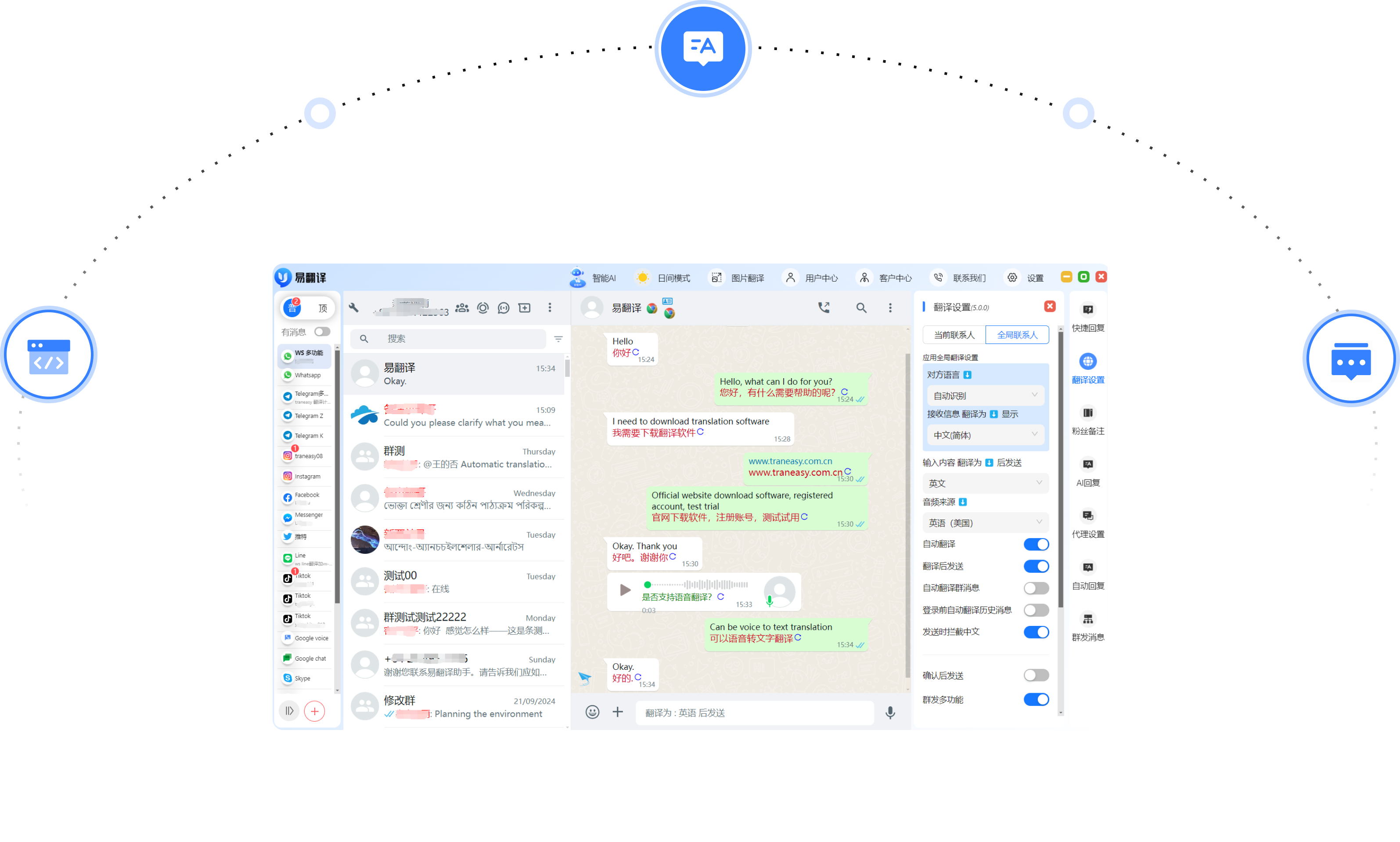
This isTraneasycore concepts. As a customer service-assisted translation platform specially designed for cross-border e-commerce, Traneasy has built-in6 major translation channels, including mainstream engines such as DeepL, Google Translate, and Tencent Translate, the system can automatically select the optimal translation engine based on the message language to ensure that each message can obtain the highest quality translation results.
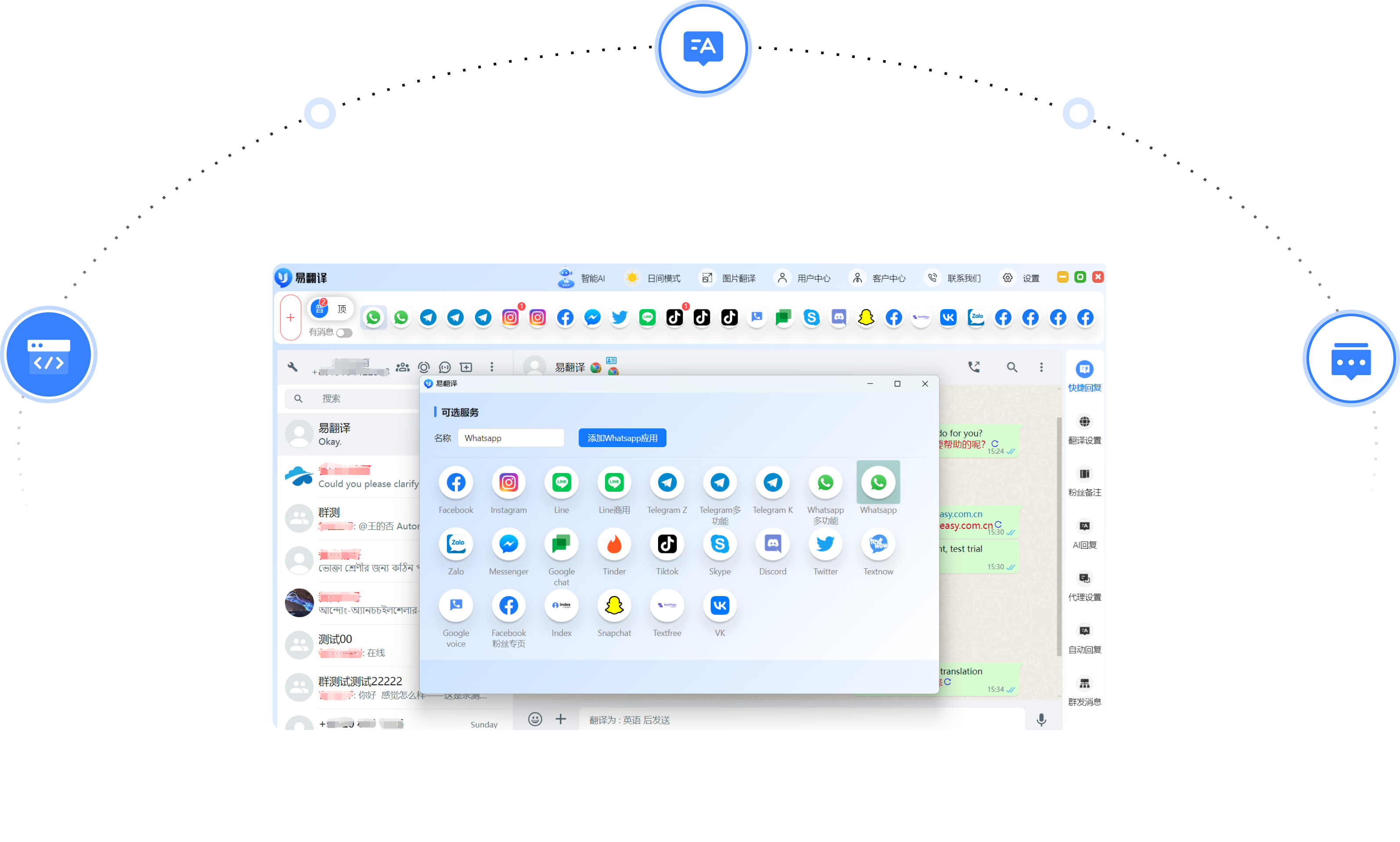
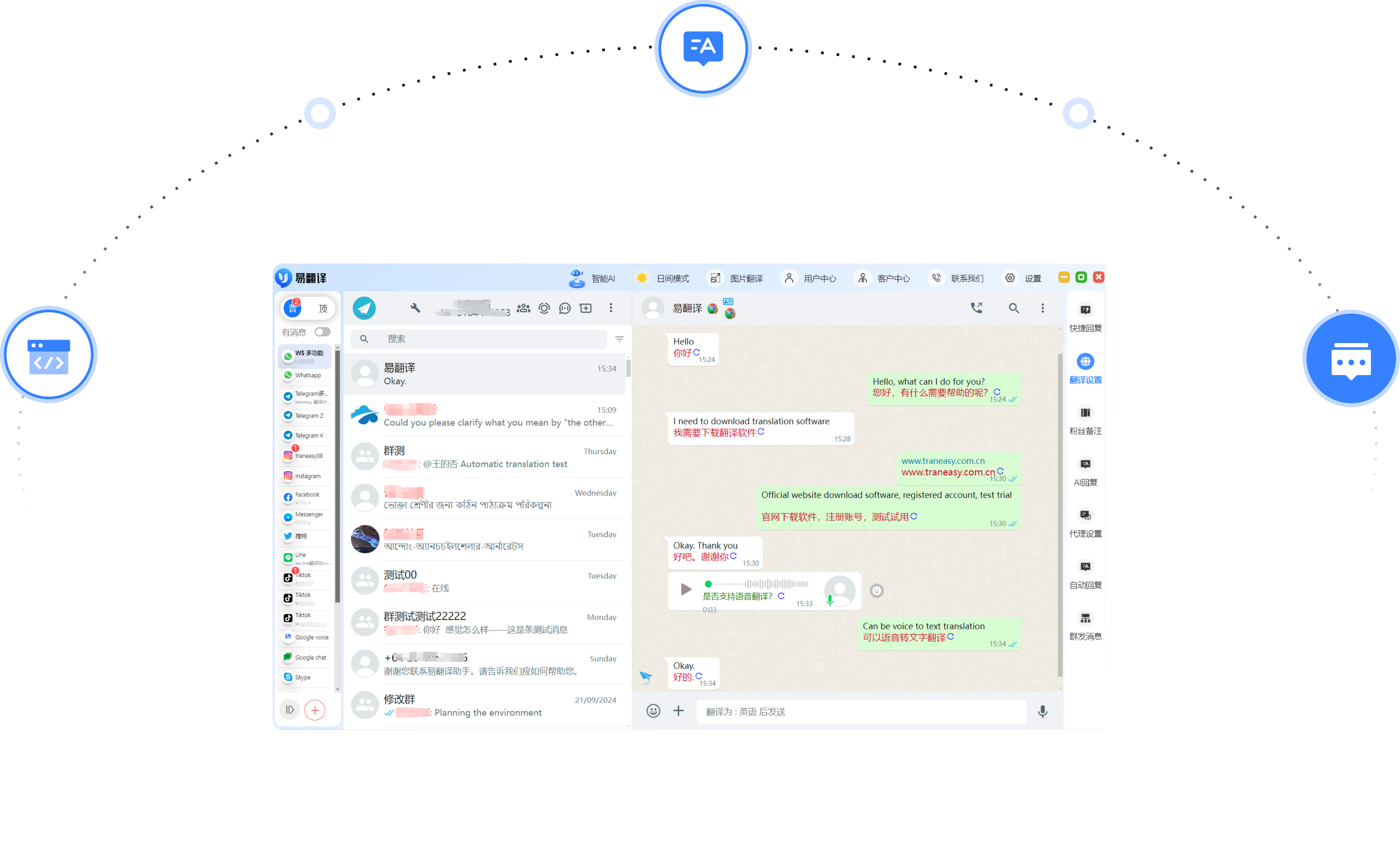
Not only that, Traneasy also supportsWhatsApp, Line, Zalo, Telegramand other mainstream social platforms real-time two-way translation. Customer service staff can reply in Chinese, and the system will automatically translate it into the customer's native language and send it; when customers consult in a foreign language, the system will translate it into Chinese in real time for display. During the entire process, multi-engine intelligent routing runs seamlessly in the background, and the customer service team does not need to care about technical details.
Selection suggestions in actual business
Based on our measured data and practical experience in the cross-border e-commerce industry, the following are for different business scenariosTranslation engine selection suggestions:
- Focus on European and American markets: Give priority to using DeepL as the main engine, with Google Translate as a backup.
- Focus on the Southeast Asian market: Google Translate is used as the main force, supplemented by Tencent Translate to handle Chinese-related scenarios.
- Full market coverage: Use a multi-engine platform (such as Traneasy) to allow the system to automatically switch engines based on language.
- Startup teams with limited budgets: Make full use of the free credits of Google Translate and Tencent Translate, combined with Yi Translate’s intelligent scheduling capabilities, to control costs while ensuring translation quality.
Summary
In the fierce competition of cross-border e-commerce, language is no longer a barrier—provided you choose the right translation tool.DeepL translation comparisonTesting tells us that each engine has its areas of expertise, and the real efficiency improvement comes fromMultiple engines working together. Instead of spending time switching between various translation engines, it is better to choose a unified platform that can intelligently schedule and cover 200+ languages.
Traneasy not only provides multi-engine intelligent routing, but also deeply integrates social platforms commonly used by cross-border e-commerce to achieve trueOne-click multi-platform translation and communication. No matter which country your customers come from, which language they speak, or which platform they contact you through, they can get a smooth and accurate translation experience.
For more translation features, please visit E-Translate's official website:www.yfanyi.com